
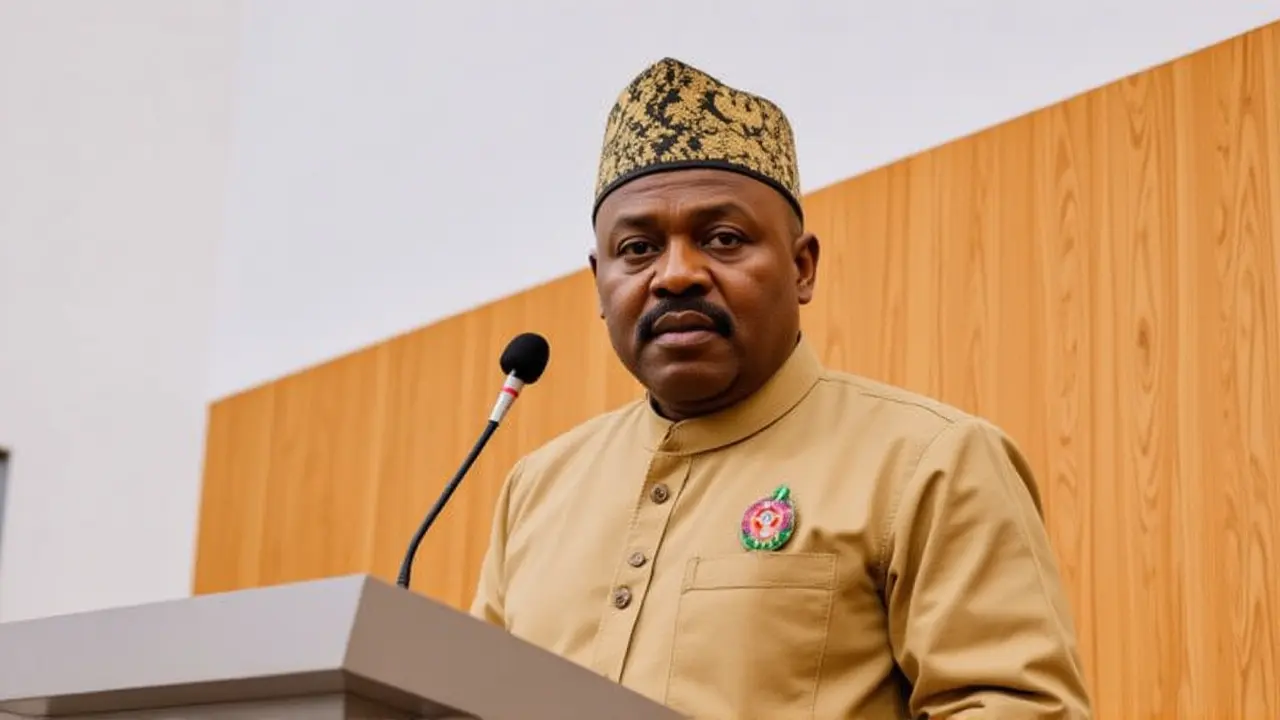
When Babagana Zulum, Minister of Defence of Nigeria, announced the deepened cooperation with the United Nations on June 24, 2026, it wasn't just another diplomatic handshake. It was a strategic pivot. The agreement explicitly ties human rights protection and victims' advocacy to military capacity building, signaling a new era where accountability isn't an afterthought but a core component of Nigeria's defense strategy.
The news broke across multiple outlets within hours, with reports confirming that this "renewed partnership" focuses heavily on protecting civilians during military operations. For a country that has long been Africa’s premier peacekeeper, this shift addresses a growing global demand: ensure those who keep the peace also respect the rights they are sworn to protect.
A Strategic Shift in Peacekeeping
Here’s the thing about this deal: it’s not starting from scratch. Nigeria’s relationship with UN peacekeeping is deep, rooted in history dating back to 1960 when Nigerian troops first deployed to Congo. Since then, Abuja has contributed to over 25 UN missions. But the landscape has changed. Modern peacekeeping isn't just about holding lines; it's about winning hearts and minds while adhering to strict international humanitarian law.
The June 2026 agreement formalizes what should have been standard practice. By linking military capacity upgrades directly to human rights training, the UN and Nigeria are creating a feedback loop. Better-trained troops mean fewer violations, which means better legitimacy for missions. It’s a pragmatic approach to a messy problem.
General Samuel Irabor, Chief of Defence Staff, emphasized the stakes during recent tributes to fallen peacekeepers. He noted that Nigeria’s active participation had helped save countless lives and restore stability. This renewed pact ensures that future contributions maintain that high standard.
Accountability in the Field
But wait—why now? The timing aligns with broader institutional pressures. In March 2026, Nigeria hosted the High-Level International Humanitarian Law Dialogue in Abuja. During the opening remarks, officials reaffirmed the nation’s resolve to uphold these laws. That dialogue set the stage for the operational details finalized in June.
The focus on "victims' rights advocacy" is particularly significant. It suggests that mechanisms will be put in place not just to prevent abuses, but to support those affected by them. This is a crucial distinction. Too often, post-conflict justice arrives too late. This partnership aims to integrate victim support into the operational timeline.
Consider the context: the Office of the UN High Commissioner for Human Rights (OHCHR) highlighted a surge in child abductions in Nigeria in January 2026, marking a decade since the Chibok crisis. The new cooperation framework likely includes protocols to address such specific, localized crises with greater speed and sensitivity.
The Financial Reality
Let’s talk numbers, because they matter. At the UN Peacekeepers Day 2026 press conference, Jean-Pierre Lacroix, Under-Secretary-General for Peace Operations, revealed that the entire UN peacekeeping budget stands at $5.38 billion. That’s a tight leash. Every dollar spent on training must yield results.
This financial constraint makes the Nigeria-UN partnership even more critical. As one of the largest troop-contributing countries, Nigeria’s efficiency directly impacts the UN’s bottom line. If Nigerian troops are better trained in human rights compliance upfront, the cost of managing scandals or investigations later drops significantly. It’s smart economics as much as it is moral imperative.
Looking Ahead: The HRC Bid
The twist is that this military-focused cooperation dovetails neatly with Nigeria’s political ambitions. On February 26, 2026, Nigeria formally declared its bid for membership in the United Nations Human Rights Council (UNHRC) for the 2027–2029 term. You can’t campaign for a seat on the world’s top human rights body without showing tangible progress on the ground.
This partnership serves as proof of concept. It demonstrates that Nigeria is willing to subject its own military apparatus to higher standards. Furthermore, the planned visit by Nazila Ghanea, UN Special Rapporteur on freedom of religion or belief, scheduled for later in 2026, will likely scrutinize these commitments. Her presence adds an extra layer of transparency that Abuja seems eager to embrace.
What’s next? We’ll likely see joint training exercises, updated rules of engagement, and perhaps a dedicated task force for monitoring civilian harm. The details are still being ironed out, but the direction is clear. Nigeria is betting its reputation on becoming a model for responsible peacekeeping.
Frequently Asked Questions
How does this affect Nigerian soldiers?
Nigerian soldiers will undergo enhanced training focused on international humanitarian law and human rights compliance. This means stricter adherence to rules of engagement during both domestic counter-insurgency operations and international peacekeeping missions. The goal is to reduce civilian casualties and improve community relations, which ultimately makes their jobs safer and more effective.
Why is Nigeria bidding for the UN Human Rights Council?
Nigeria seeks to leverage its historical role as a peacekeeper to influence global human rights policy. By securing a seat for the 2027–2029 term, Abuja aims to shape international norms around conflict resolution and victim protection. This bid is bolstered by recent partnerships like the June 2026 agreement, which demonstrate practical commitment to these ideals.
What is the significance of the $5.38 billion budget figure?
The $5.38 billion figure represents the total annual budget for all UN peacekeeping operations worldwide. With finite resources, the UN prioritizes partners who maximize impact per dollar. Nigeria’s commitment to reducing human rights violations through better training helps justify continued funding and support for its large troop contributions.
Who is Nazila Ghanea and why is she visiting?
Nazila Ghanea is the UN Special Rapporteur on freedom of religion or belief. Her official visit to Nigeria, scheduled for 2026, will assess the country’s record on religious freedom and related human rights issues. Her findings could influence international perception of Nigeria’s readiness for UNHRC membership and highlight areas needing improvement in the new cooperation framework.